Work is performed by independent professionals.
Unattended death cleanup — also called undiscovered death or decomposition cleanup — addresses one of the most demanding categories of biohazard remediation. When a person dies and is not discovered for an extended period, biological decomposition produces severe contamination that penetrates deeply into building materials and creates odor and biological hazard throughout the property. This free referral service connects Snohomish County families and property managers with independent providers who specialize in unattended death remediation.
Work is performed by independent professionals.
Why Unattended Deaths Require Specialized Cleanup
Human decomposition follows a predictable progression. In the mild Pacific Northwest climate typical of Snohomish County — average temperatures of 51°F annually — decomposition proceeds more slowly than in hot climates, but still produces significant contamination within days of death. Body fluids and decomposition byproducts saturate the immediate surface and migrate outward and downward through capillary action.
In Everett's older housing stock — particularly pre-1970 construction with wood subfloors and original hardwood or vinyl floor coverings — decomposition fluids penetrate through floor coverings into subfloor lumber, into floor joists, and in severe cases into basement ceiling materials below. The contamination footprint is typically much larger than the visible stain.
Decomposition also produces volatile organic compounds — putrescine, cadaverine, and related compounds — that bond chemically to porous materials throughout the surrounding structure. These compounds cause persistent odor that surface cleaning does not eliminate; they require specialized treatment to neutralize.
What the Cleanup Process Involves
Scene assessment quantifies the extent of contamination beyond the visible surface. Providers use moisture meters, thermal imaging, and chemical reagents to map contamination in subsurface materials. This assessment determines whether cleaning alone is sufficient or whether structural removal — subfloor sections, drywall, insulation — is necessary.
Containment isolates the affected area. HVAC systems are closed to prevent odor and biological material from spreading to unaffected areas. Negative air pressure is established in severe cases.
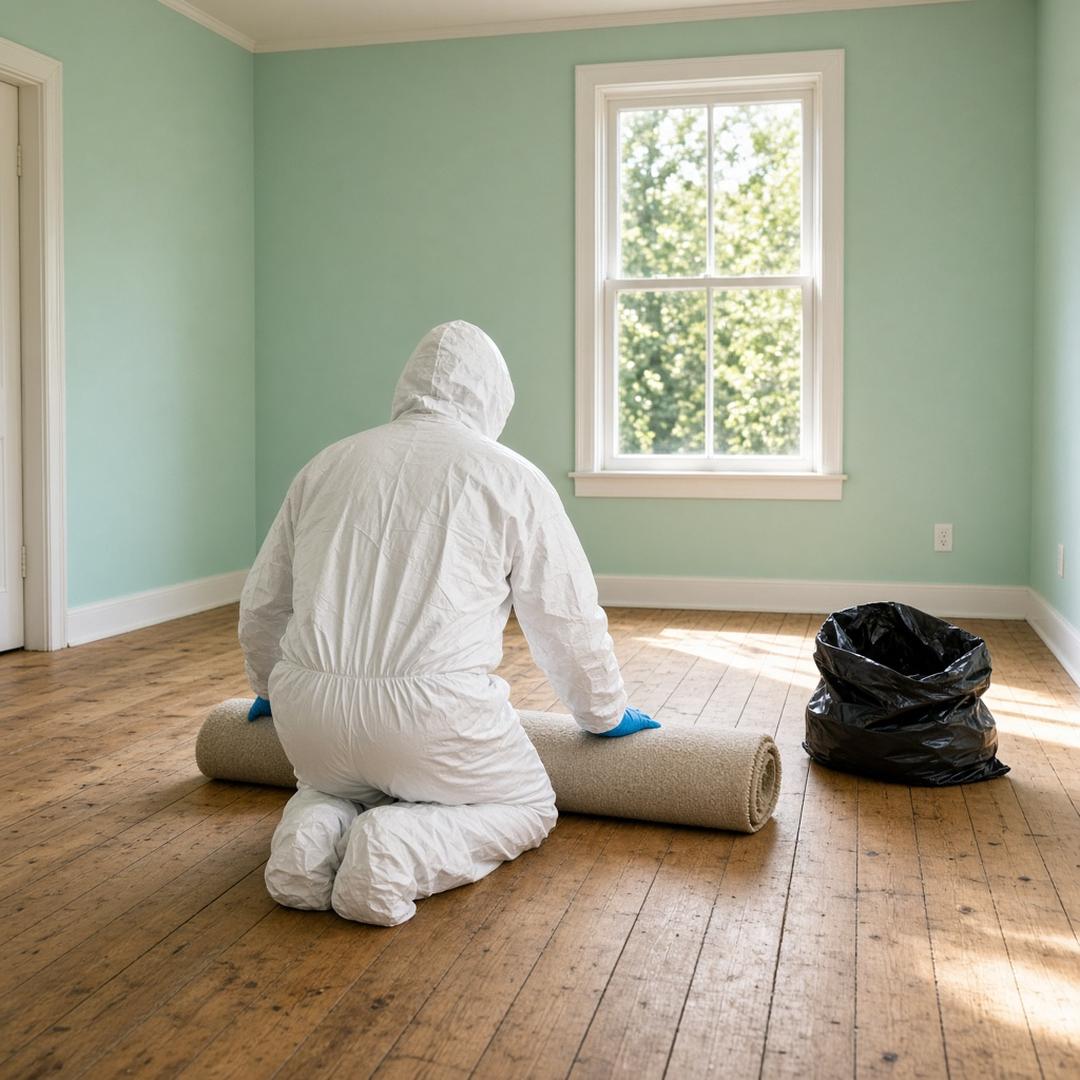
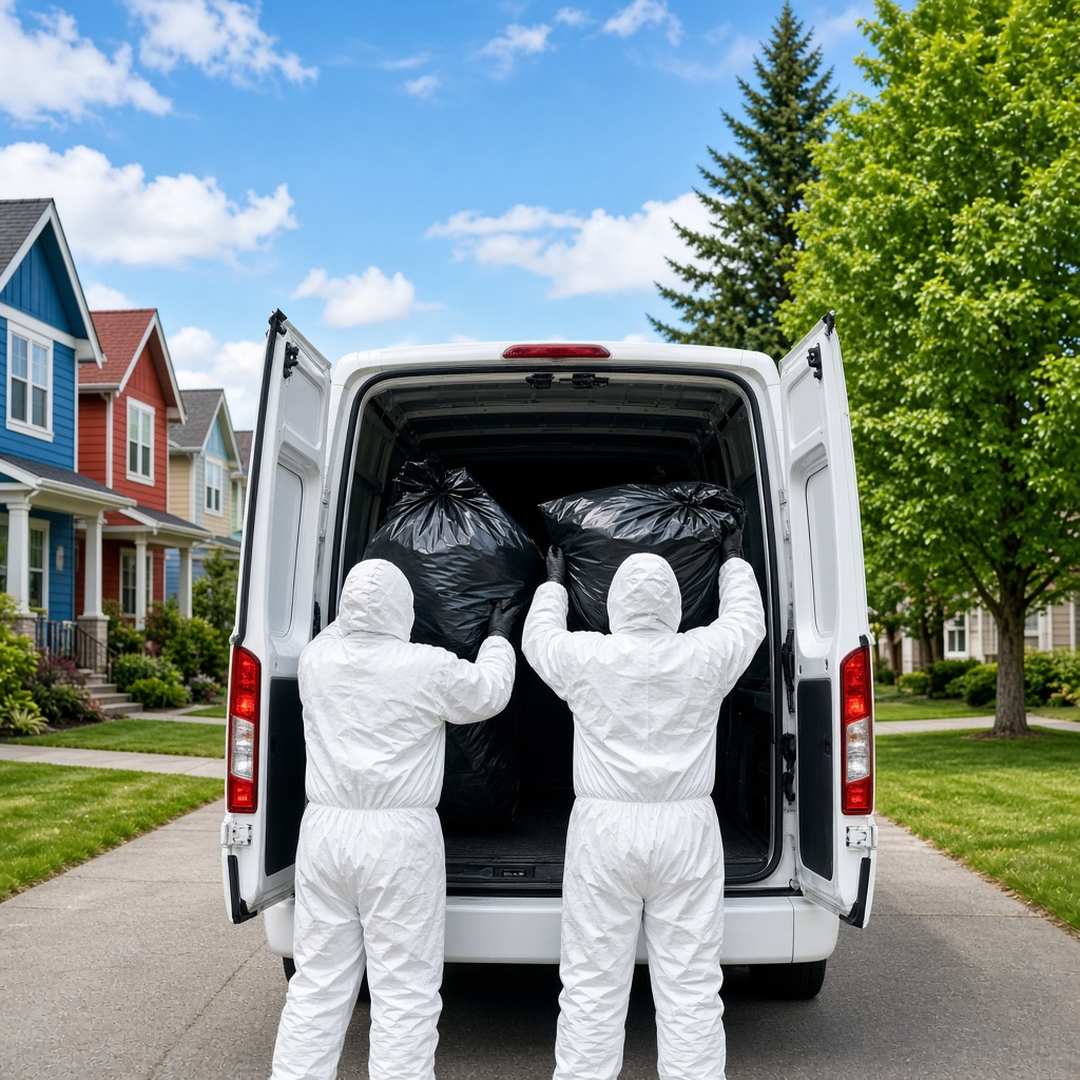
Physical removal of contaminated material follows, including all porous surfaces that cannot be decontaminated to a safe standard. In unattended death scenarios, this frequently includes carpet, padding, and subfloor sections. All removed material is disposed of as regulated medical waste.
Surface decontamination with EPA-registered disinfectants follows physical removal. Dwell times are documented. Odor treatment — thermal fogging for porous surface penetration, hydroxyl generation or ozone for airborne compounds — addresses residual VOC contamination.
Structural restoration — replacing removed subfloor sections, reinstalling flooring — may be performed by the same contractor or require a separate general contractor depending on the scope.
Costs for Unattended Death Cleanup
Unattended death cleanup is among the more expensive biohazard remediation categories because of the scope of decomposition and structural involvement. Fixr reports national averages of $3,000–$10,000 for contained situations; situations with significant structural penetration or extended decomposition periods frequently run $10,000–$25,000. HomeGuide cites a similar range, noting that duration of decomposition — days versus weeks versus months — is the primary cost driver.
Homeowner's and landlord insurance policies in Washington cover unattended death cleanup as a sudden and accidental loss in most cases. Property managers should confirm coverage under their landlord policy before assuming residential coverage applies.