What Happens During a Professional Biohazard Cleanup in Everett?
Published October 2026 · Biohazard Cleanup Everett WA
When a traumatic event — an unattended death, a violent crime, or a serious accident — occurs at a property, families and property managers face the immediate question of what comes next. Professional biohazard cleanup is the process of safely restoring a property after biological contamination, and understanding what it involves helps families know what to expect.
Step 1: Scene Release
Biohazard cleanup cannot begin until law enforcement has released the scene. In Snohomish County, the Everett Police Department, Snohomish County Sheriff's Office, or another jurisdiction handles scene investigation. The Snohomish County Medical Examiner's office (3020 Rucker Ave, Everett) handles all county death investigations. When law enforcement completes its work, they release the scene to the property owner or next of kin.
Cleanup providers will not enter a property before scene release. When you call 123-456-7890, providers can confirm availability for response after release and walk you through what to expect.
Step 2: Assessment
When a certified contractor arrives, the first step is a thorough assessment of the affected area. This involves:
- Identifying all areas of biological contamination (not just the visible surface)
- Evaluating penetration depth into structural materials
- Identifying affected HVAC pathways
- Assessing odor spread throughout the structure
- Documenting the scope for insurance and regulatory purposes
In older Everett homes — particularly the 1940s–1960s construction common in many city neighborhoods — biological material can penetrate through floor coverings into wood subfloors and structural members. The assessment determines whether surface cleaning alone is sufficient or whether structural removal is required.
Step 3: Containment
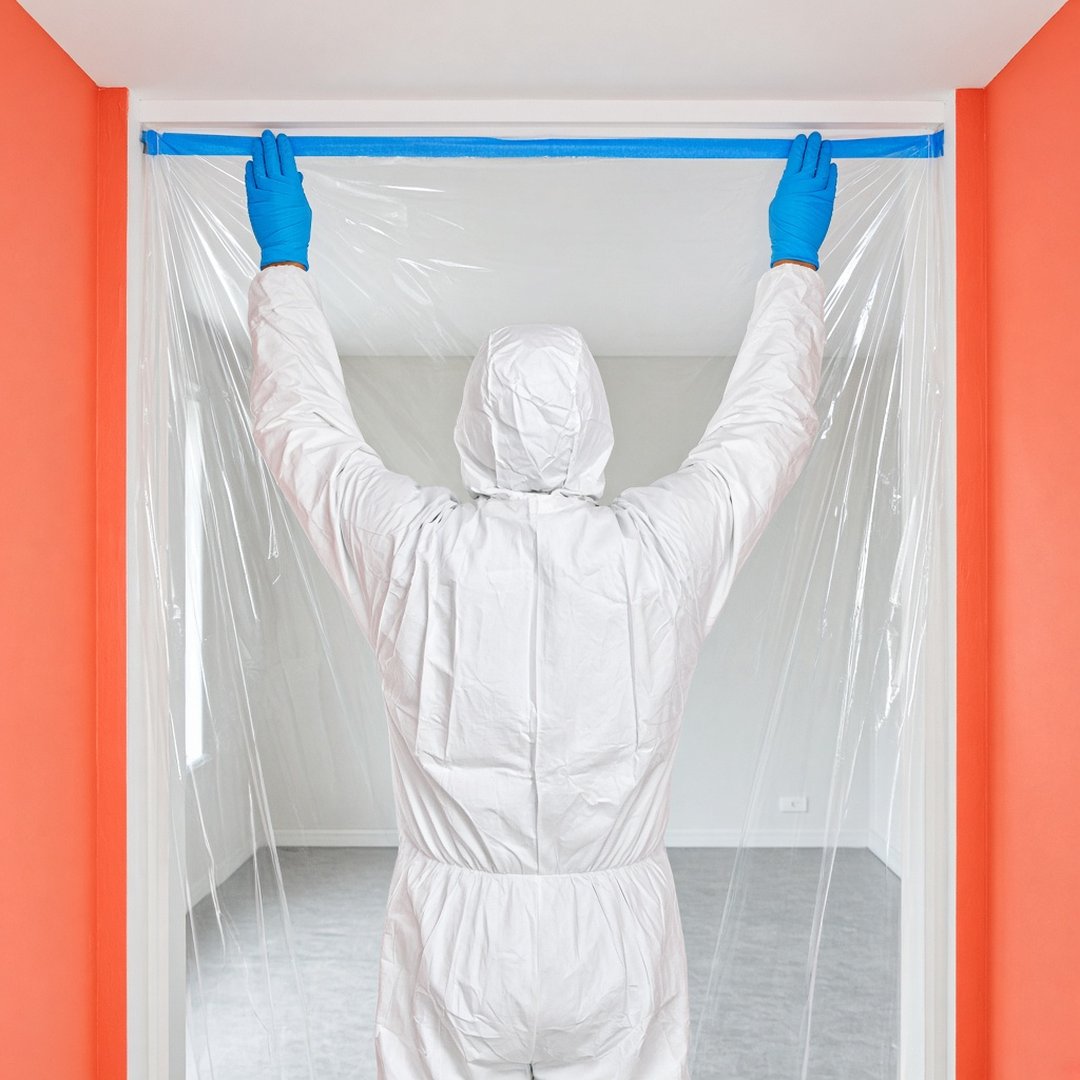
Before any removal begins, contractors establish containment to prevent cross-contamination to unaffected areas. This typically involves:
- Sealing doorways and HVAC vents with plastic sheeting
- Establishing a decontamination corridor for technician entry and exit
- Setting up negative air pressure in severe cases to prevent airborne spread
- Placing warning barriers if other occupants are present in a multi-unit property
Step 4: Personal Protective Equipment
All technicians working in a biohazardous environment wear full PPE: Tyvek suits, respirators rated for biological hazards (N95 or higher), eye protection, and double-gloved nitrile gloves. PPE requirements vary based on pathogen type and contamination severity.
Step 5: Biological Material Removal
Biological material — blood, tissue, and bodily fluids — is removed using specialized absorbent materials and EPA-registered cleaning agents. Porous materials that cannot be decontaminated (carpet, upholstered furniture, mattresses) are removed and disposed of as regulated medical waste.
In cases where contamination has penetrated flooring:
- Carpet and padding are cut and removed
- Subflooring is assessed for penetration
- Affected sections of wood subfloor are removed if contaminated
- In severe cases, structural members may require treatment or removal
Step 6: Surface Decontamination
After removal, all affected surfaces are treated with EPA-registered disinfectants effective against bloodborne pathogens (HIV, hepatitis B, hepatitis C) and other biological hazards. Disinfectants must remain on surfaces for specified dwell times to achieve effectiveness. Surface treatment covers all confirmed and potential contamination areas — not just visible staining.
Step 7: Odor Treatment
Biological decomposition produces volatile organic compounds (VOCs) that bond to porous surfaces — walls, ceiling materials, insulation — throughout a structure. After physical removal and disinfection, odor treatment addresses residual compounds using:
- Thermal fogging: Penetrates porous surfaces to neutralize VOC molecules
- Hydroxyl generators: Safe for occupied areas; convert airborne odor compounds
- Ozone treatment: Highly effective but requires full evacuation; used in severe cases
Step 8: Verification and Documentation
After cleanup, contractors provide documentation of the work performed, including:
- Written scope of work
- Products used (EPA registration numbers)
- Waste disposal manifests for regulated medical waste
- Before/after documentation supporting insurance claims
- CVCP-compatible itemized invoicing for qualifying crime scenes
In some cases, air quality or surface sampling may be performed for independent verification.
What Families Should Know
You do not need to be present. Many families designate a trusted friend, property manager, or estate representative as the on-site contact. Contractors work with whoever the family designates.
Insurance handles most costs. Standard homeowner's policies cover biohazard cleanup as a sudden and accidental loss. Contact your insurer before authorizing work to establish a claim number. Learn more about insurance coverage for biohazard cleanup in Washington.
CVCP may help with crime scenes. Washington's Crime Victims Compensation Program provides assistance for qualifying victims of violent crime, which can include cleanup costs. The crime must be reported to law enforcement. See how the Washington CVCP works and who qualifies.